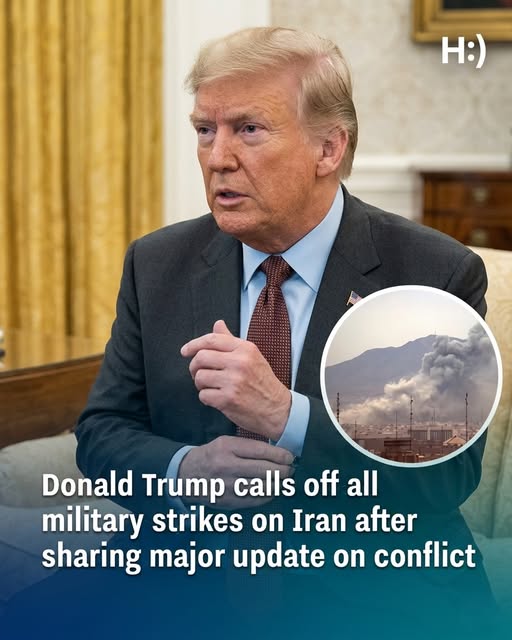
Public attention has intensified around Donald Trump after he announced a temporary halt to planned military strikes against Iran, a decision that has added a new layer of complexity to an already volatile geopolitical situation. The announcement, shared on his platform Truth Social, came amid rising global concern over escalating tensions in the Middle East, particularly following earlier threats targeting Iranian energy infrastructure. In his statement, Trump emphasized that recent discussions between the United States and Iran had been “very good and productive,” suggesting a possible shift from confrontation toward cautious diplomacy. However, the tone and structure of the message—delivered in all capital letters and lacking detailed clarification—left analysts, political observers, and the international community questioning the depth and credibility of these negotiations. The absence of confirmed dialogue from Iranian officials only added to the uncertainty, creating a situation where the announcement itself became as controversial as the conflict it aimed to de-escalate. For many, this moment represents not just a pause in military planning, but a test of whether communication channels between two historically adversarial nations can genuinely produce stability or if the situation remains fragile beneath the surface.
The backdrop to this development is a period of sustained tension involving the United States, its allies, and Iran, particularly in strategic areas such as the Strait of Hormuz, a critical route for global oil transportation. Prior to the announcement, Trump had issued a stark ultimatum warning that failure to reopen the waterway without threat would result in decisive military action against Iranian power plants and infrastructure. This warning followed coordinated military actions earlier in the year involving the United States and Israel, which targeted Iranian military capabilities and leadership structures in Tehran. The consequences of those strikes reverberated across the region, triggering retaliatory actions from Iran that extended beyond its borders. Countries such as Qatar, United Arab Emirates, Saudi Arabia, and Iraq reported missile and drone activity, raising fears of a broader regional conflict. In this context, the decision to postpone strikes appears less like a definitive resolution and more like a temporary pause in an escalating cycle of action and reaction, where each move carries significant political, economic, and humanitarian implications. Observers note that while the rhetoric has softened slightly, the underlying tensions remain deeply entrenched, with both sides maintaining strategic positions that could quickly reignite hostilities.
Complicating the situation further is the lack of transparency surrounding the alleged negotiations. While Trump described the conversations as detailed and constructive, officials in Iran did not immediately confirm that such discussions had taken place, leading to speculation about the nature and extent of any diplomatic engagement. Abbas Araghchi, Iran’s foreign minister, acknowledged communication with Hakan Fidan, highlighting Turkey’s role as a potential intermediary in facilitating dialogue. This indirect channel reflects a broader pattern in international diplomacy, where third-party nations often act as bridges between conflicting sides when direct communication is strained or politically sensitive. However, reliance on intermediaries can also slow progress and introduce additional complexities, as each party must navigate not only their own interests but also the influence and priorities of those facilitating the discussions. Analysts argue that without clear, direct confirmation from both Washington and Tehran, it is difficult to assess whether the pause in military action is grounded in meaningful progress or simply a strategic delay. The uncertainty surrounding these negotiations underscores the fragile nature of diplomatic efforts in high-stakes conflicts, where public statements, political signaling, and behind-the-scenes negotiations often diverge significantly.
At the same time, reactions from the international community and the public have been mixed, reflecting broader divisions in how Trump’s leadership approach is perceived. Supporters view the decision to postpone strikes as a sign of restraint and a willingness to explore diplomatic solutions, particularly after weeks of escalating rhetoric and military posturing. Critics, however, argue that the initial threats and subsequent reversal highlight inconsistency and unpredictability in decision-making, factors that can undermine confidence among allies and increase volatility in already tense situations. The use of social media platforms like Truth Social as the primary channel for such significant announcements has also drawn scrutiny, with some observers questioning whether complex geopolitical strategies should be communicated through informal, highly public formats. This dynamic has contributed to a broader conversation about the role of modern communication in international relations, where statements can instantly reach global audiences but may lack the nuance and context necessary for effective diplomacy. As a result, each message not only informs but also shapes perceptions, influences markets, and affects the strategic calculations of multiple nations simultaneously.
Beyond the immediate political implications, the situation also highlights the interconnected nature of global security, economics, and energy infrastructure. The Strait of Hormuz remains one of the most critical chokepoints in the world, with a significant portion of global oil supply passing through its waters. Any disruption to this route can have far-reaching consequences, affecting fuel prices, supply chains, and economic stability across continents. The earlier threats targeting Iranian energy facilities further underscored the vulnerability of such infrastructure in modern conflicts, where strategic assets become focal points in both military planning and political messaging. By temporarily halting strikes, the United States may be seeking to avoid immediate escalation while preserving leverage in ongoing discussions. However, the broader risks remain, as even limited confrontations in the region have the potential to trigger wider instability. For countries heavily dependent on energy imports, the situation is being closely monitored, with governments and industries preparing for multiple scenarios ranging from continued de-escalation to renewed conflict.
Ultimately, the current moment represents a critical juncture in the evolving relationship between the United States and Iran, shaped by a combination of historical tensions, recent ռազմական actions, and uncertain diplomatic efforts. The decision by Donald Trump to pause military strikes may offer a temporary window for dialogue, but it does not resolve the underlying issues that have driven the conflict to this point. Questions remain about the durability of any potential agreement, the willingness of both sides to compromise, and the role of regional and global actors in influencing the outcome. For the public, the situation serves as a reminder of how quickly geopolitical dynamics can shift, and how decisions made at the highest levels of government can have immediate and far-reaching consequences. Whether this pause leads to meaningful progress or simply delays further confrontation will depend on what happens next—both in public statements and in the quieter, often unseen channels of diplomacy where the future of such conflicts is ultimately determined.